Archives
- 2026-10
- 2026-09
- 2026-08
- 2026-07
- 2026-06
- 2026-05
- 2026-04
- 2026-03
- 2026-02
- 2026-01
- 2025-12
- 2025-11
- 2025-10
- 2025-09
- 2025-03
- 2025-02
- 2025-01
- 2024-12
- 2024-11
- 2024-10
- 2024-09
- 2024-08
- 2024-07
- 2024-06
- 2024-05
- 2024-04
- 2024-03
- 2024-02
- 2024-01
- 2023-12
- 2023-11
- 2023-10
- 2023-09
- 2023-08
- 2023-07
- 2023-06
- 2023-05
- 2023-04
- 2023-03
- 2023-02
- 2023-01
- 2022-12
- 2022-11
- 2022-10
- 2022-09
- 2022-08
- 2022-07
- 2022-06
- 2022-05
- 2022-04
- 2022-03
- 2022-02
- 2022-01
The activation of P Rs modulates the activity of
2024-02-09

The activation of P1Rs modulates the activity of many ion channels and receptors (Sebastião and Ribeiro, 2009) and the recent detection of P1Rs at the postsynaptic level of the adult NMJ (Garcia et al., 2014) makes potentially possible an adenosine-mediated modulation of the nicotinic bromophenol bl
Some of the studies reported elevated ADA levels in schizoph
2024-02-09
Some of the studies reported elevated ADA levels in schizophrenia patients (SZ) undergoing treatment with antipsychotics (Dutra et al., 2010; Brunstein et al., 2007; Ghaleiha et al., 2011). However, it is unclear whether the increased serum ADA reported in these studies was the consequence of treatm
Introduction br This paper is a commentary
2024-02-09
Introduction This paper is a commentary on the history of language among the Aché. What was language for the Aché prior to contact with Paraguayan society? How has the Aché language come to be endangered? Why is language such an important issue today? In exploring these questions I come to a slig
A similar circuit between pyramidal neurons and SST
2024-02-09
A similar circuit between pyramidal neurons and SST interneurons is also prevalent in layers 2/3 of the cortex. The synapses onto SST interneurons, however, are functionally weak, raising questions about their computational power. In the first set of experiments, Urban-Ciecko et al. (2018) show that
Neuropathic animals display increased sensitivity to
2024-02-09
Neuropathic animals display increased sensitivity to the anti-nociceptive effect of baclofen and whilst the number and affinity of GABAB SIN-1 chloride in the dorsal horn are not altered (Smith et al., 1994; Zemoura et al., 2016), GABAB receptors subunits (B1 and B2) are both down-regulated in sens
Colistin Methanesulfonate sodium salt br Experimental and si
2024-02-07
Experimental and simulation section Acknowledgments Financial support for this work was provided by the National Natural Science Foundation of China (No. 81101688). We would like to thank NC State University High Performance Computing Center for providing us computing resources, and Dr. Lihui
The approach of enzymatically converting an analyte and dete
2024-02-07

The approach of enzymatically converting an analyte and detecting it by the resulting small pH changes near the reduced graphene oxide (rGO) surface has successfully been pursued in case of urea (Piccinini et al., 2017). Furthermore, this work reported that electrostatic layer-by-layer (LbL) assembl
Apelin APJ triggers a variety
2024-02-07
Apelin/APJ triggers a variety of cellular signaling pathways (Fig. 1). Recent studies from our laboratory showed that apelin-13 induces vascular smooth muscle cell (VSMC) proliferation by the upregulation of Cyclin D1 expression, which is involved in an ERK-dependent activation of Jagged-1/Notch3 si
Previously we have detected the
2024-02-07
Previously, we have detected the expression of APJ receptor on stomach projecting pd 1 receptor sale in DMV, in addition, icv administration of apelin-13 induced a remarkable c-Fos activation in those cells which were previously marked by a retrograde neuronal tracer fast blue (Birsen et al., 2016).
In conclusion we demonstrated that in the
2024-02-07
In conclusion, we demonstrated that, in the skeletal muscle of rats with T1DM, CRBN levels increased and AMPK, Akt, GLUT4, PGC-1α, and FNDC5 levels decreased, resulting in increased fasting glucose levels. Aerobic exercise training decreased levels of CRBN, which was possibly mediated by AMPK, Akt,
The G R mutation is
2024-02-07
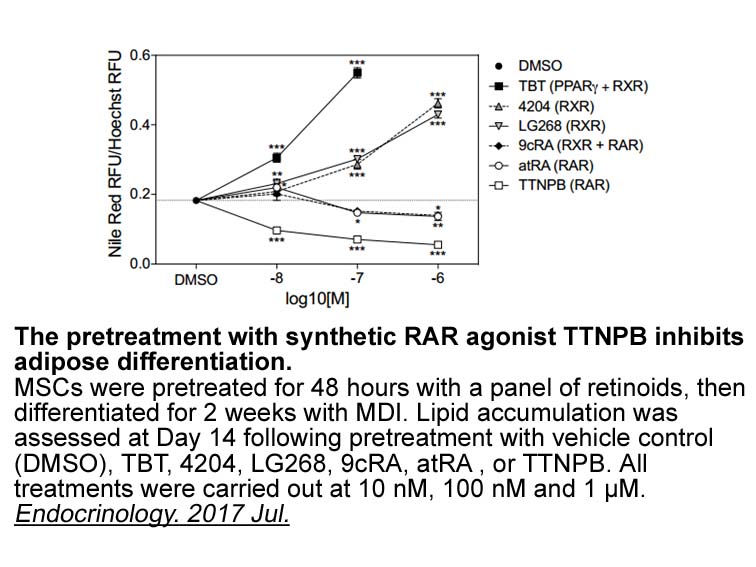
The G1202R mutation is located at the solvent front of the ALK kinase domain adjacent to the inhibitor's binding pocket. Although barely reported in the setting of crizotinib resistance, it has emerged as the most refractory mutation to both the first- and second-generation ALK inhibitors. The large
The correlation in the increase of BADH mRNA
2024-02-07
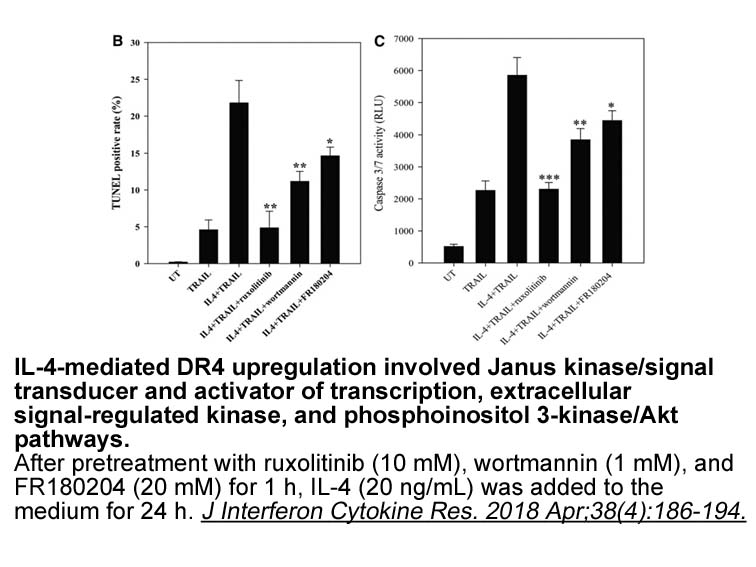
The correlation in the increase of BADH mRNA, protein levels, and enzyme activity, demonstrate that oxidation of betaine aldehyde by BADH is primordial to regulate the GB accumulation during physiological cardiac hypertrophy induced by pregnancy, this implies a major role because GB levels enhance c
Young disease transitioning B Sle mice show partial loss of
2024-02-06
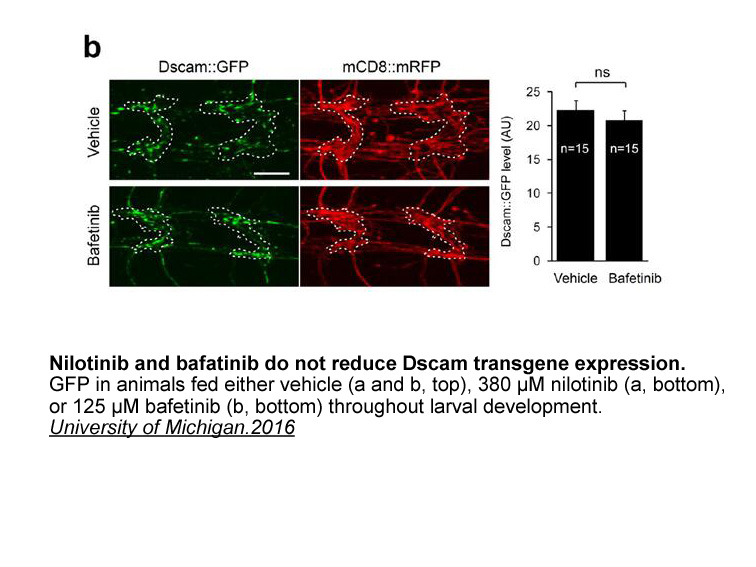
Young disease-transitioning B6·Sle1 mice show partial loss of leukocyte Axl versus B6 controls (data not shown). Further, BMDM from diseased B6·Sle1.Yaa mice do not express detectable levels of ADAM10 and TACE (ADAM17) but do express basal levels of Axl similar to wild type B6-derived BMDM (Suppleme
DCG IV mg br Author contributions br Competing
2024-02-06
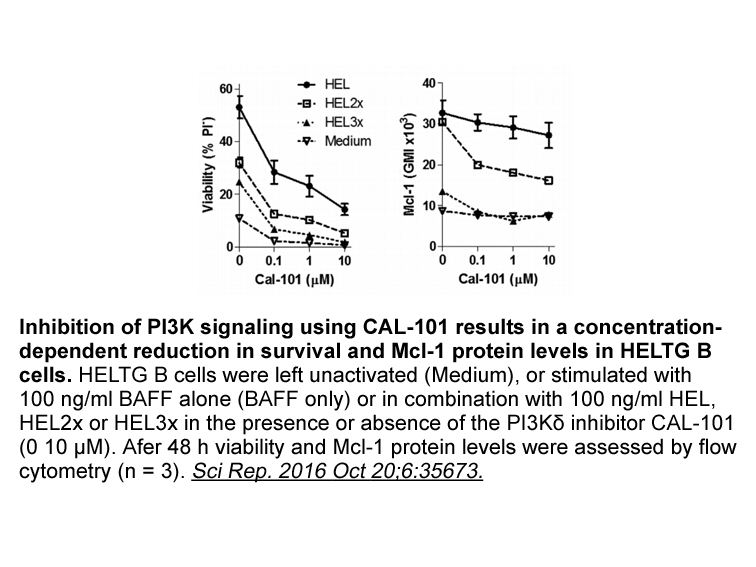
Author contributions Competing interests Transparency document Acknowledgments This research was funded by a TOP ZonMW grant (40-00812-98-10054) to R.O.E., a DFG grant (KR4391/1-1) and IZKF Erlangen grant (J36) to A.K. and supported in part by Centro de Investigación Biomédica en Red de
br Results Of the U S
2024-02-05
Results Of the 51 U.S. jurisdictions surveyed (Table 1), 33 reported that hyperargininemia is one of the conditions for which all newborns are required to be screened, with the earliest screening reported in Massachusetts in 1999. Of the 18 other jurisdictions, an additional 5 reported that hyper
8639 records 237/576 page Previous Next First page 上5页 236237238239240 下5页 Last page